








How is Loggia different from GoHighLevel?
GoHighLevel is a mature platform built first for agencies reselling to many clients — funnels, snapshots and workflows you assemble. Loggia is built for the owner: one agent that does the front-office work itself, approval-gated where it matters, flat-priced per business. Full comparison is in the Compare section above.
Does the AI act on its own?
Only where you switch it on. Autopilot is the one part that messages customers without waiting for you — because a reply that needs approval isn't a fast reply, and speed is the whole point. It ships off. You write the opening message yourself, set quiet hours, and one switch pauses everything. Nothing else in Loggia sends, spends or publishes without your sign-off, and every automatic action lands in your audit log.
What powers the agent?
Claude, by Anthropic — with per-organization usage quotas and a full audit trail of every AI action.
Is my data shared between businesses?
Never. Every organization is isolated at the database layer, and every request re-checks your membership.
What is ChatGPT Boost?
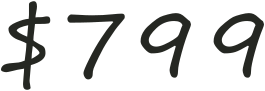
We audit your website for the structured data, crawler access and question-shaped content answer engines use when deciding which businesses to name, then Claude writes the fixes for you to approve. Nobody can buy a placement inside ChatGPT — what this does is make your site readable to it, which is the part you can control. Included in the $799 price at no extra cost.
What is Loggia Linked?
A creator studio in the same account family: upload one vertical video, publish to six platforms through their official APIs, and get a bio page that updates itself. Platform posting is in a labelled demo mode until TikTok, Google and Meta approve it.
What does it cost?
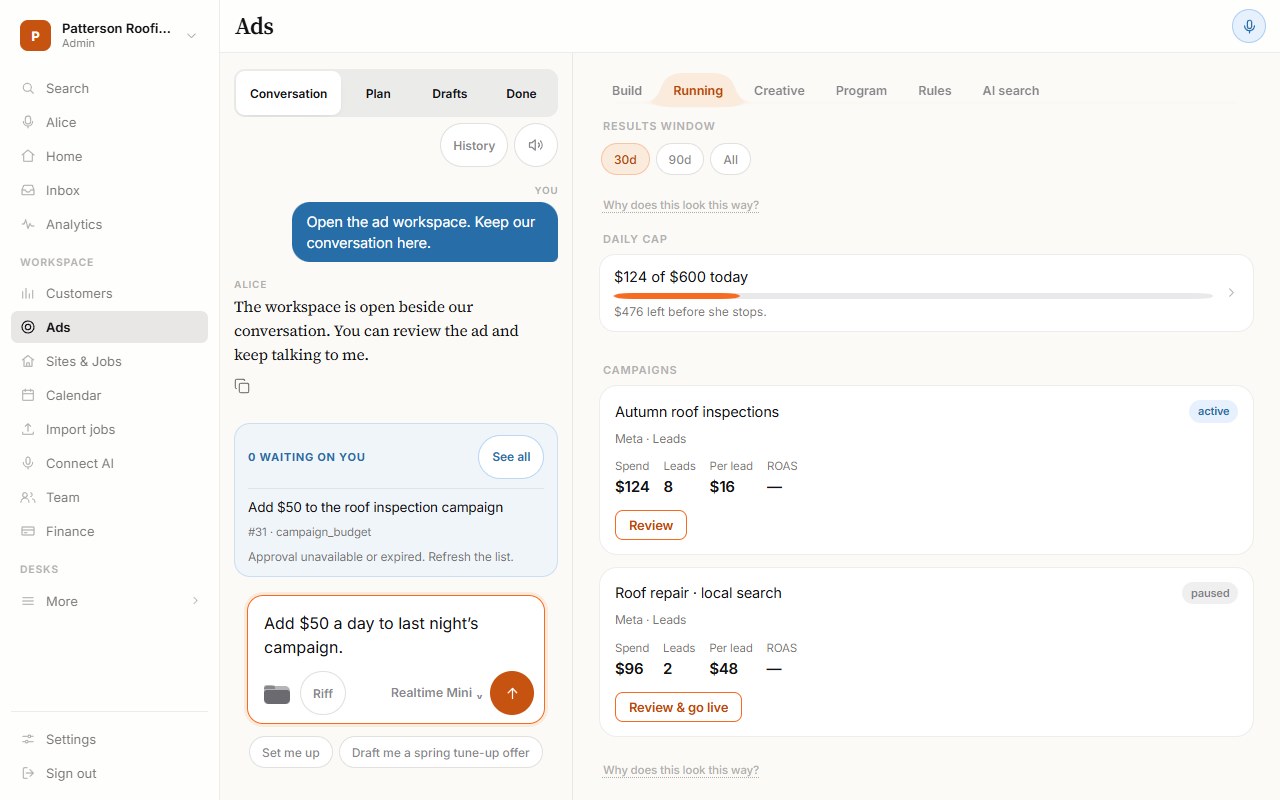
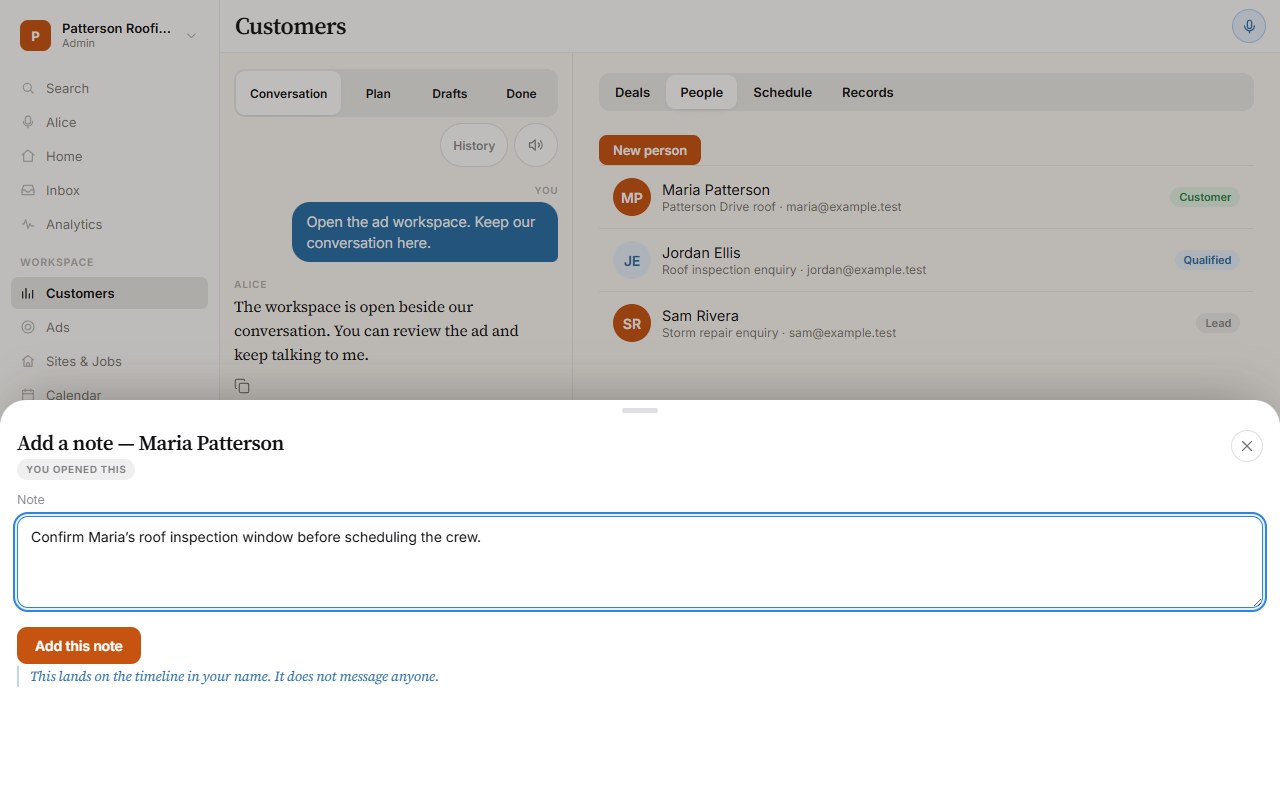
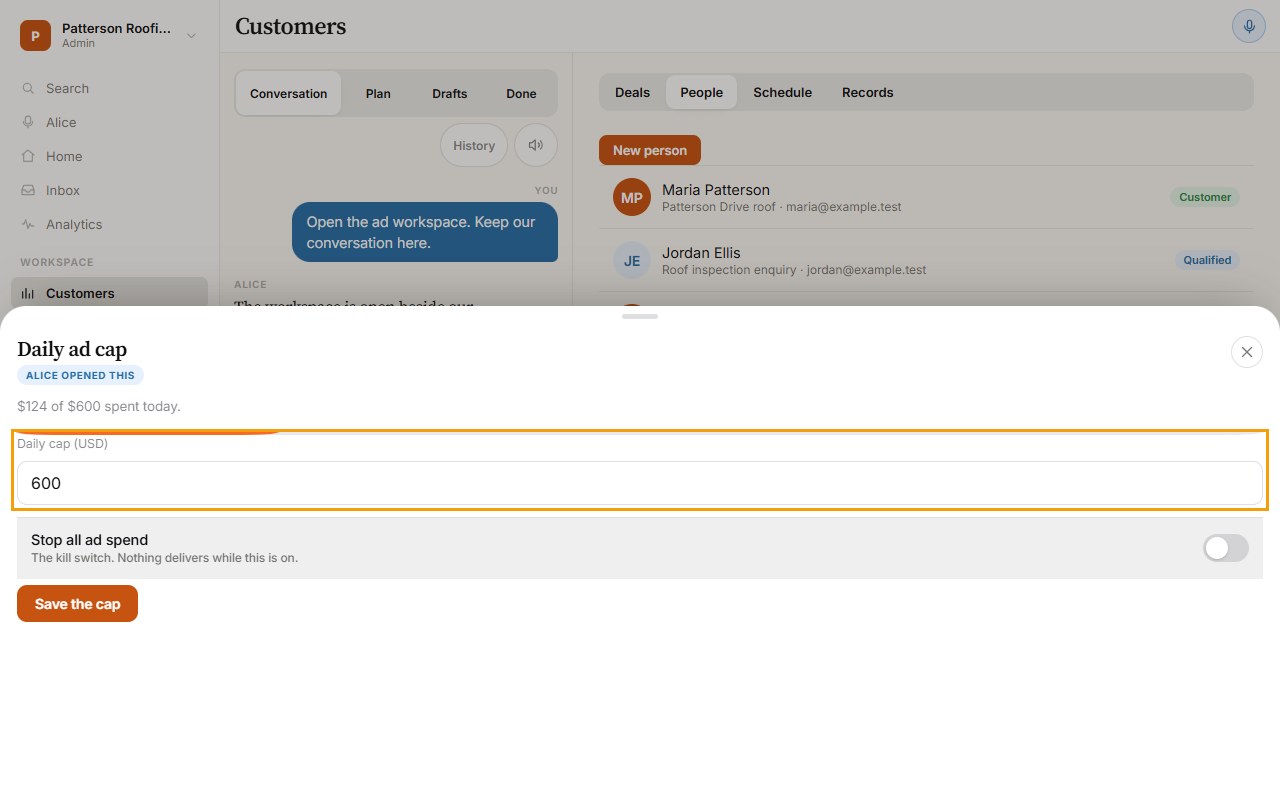
$799/mo, flat, everything included — there is only one plan, month to month, $0 setup. The AI drafts your ads, answers leads in seconds, books appointments and recalls ad leads, and you approve; text a goal and the agent runs the month. Alice the voice agent comes with 1,500 voice minutes a month and is $0.25 a minute after that, plus standing permission for CRM updates, ad drafts and photo work so she stops asking each time — revocable in one word — inside a hard-capped spend envelope. ChatGPT Boost AI-visibility audits are built in. The voice receptionist is included. No seats, no % of ad spend, no annual contract. The one free thing in the family is Loggia Linked’s trial: connect your social profiles and watch your analytics at no cost.
Who is Loggia not for?
Owners who answer their own phone, set their own appointments and run their own ads. For them Loggia is a new $799 line on the bill rather than a replacement for anything, and we would rather say so before the call than after. The arithmetic works where a human is already on the invoice — an answering service, a setter or ISA, or an agency retainer for ad management. That is the row above, and it is why the question at the top of this section is the first thing on the page.
How soon does it actually work?
In three stages, because the carriers control two of them. Hour one: forward your line and Alice answers calls, books, writes the CRM and drafts ads. Then texting from a Loggia local number, which takes about a business day for the carrier to enable — a shop that publishes the owner's own mobile keeps it and texts from the Loggia number instead, because mobile numbers cannot be text-enabled by a second provider. Then automated outbound texting, which waits on carrier 10DLC vetting: typically 1 to 3 weeks, and nobody can speed it up. Loggia files and pays for that registration on day one. We do not promise everything on day two.
What happens when I cancel?
You cancel yourself in the billing portal — no phone call, no retention queue, no notice period, no exit fee, no buyout of a remaining term. Access runs to the end of the month you have already paid for and then stops. Your contacts export by CSV, 1,000 rows per file, and your workspace record exports as JSON, at any time, before or after; email support@loggia.work for anything else you need out. The exit is on the pricing page because a company confident in the product does not need to trap you in it.